
The Doctress of Kingsland…
There is a long history of white witches and faith healing in Britain.
For ordinary people, white witches or “hedge” witches were often women who simply had enough herbal knowledge to enable them to help ease headaches, clean wounds, set broken bones or relieve some of the pain of childbirth. They often doubled as midwives in eras when women gave birth at home with no medical intervention.
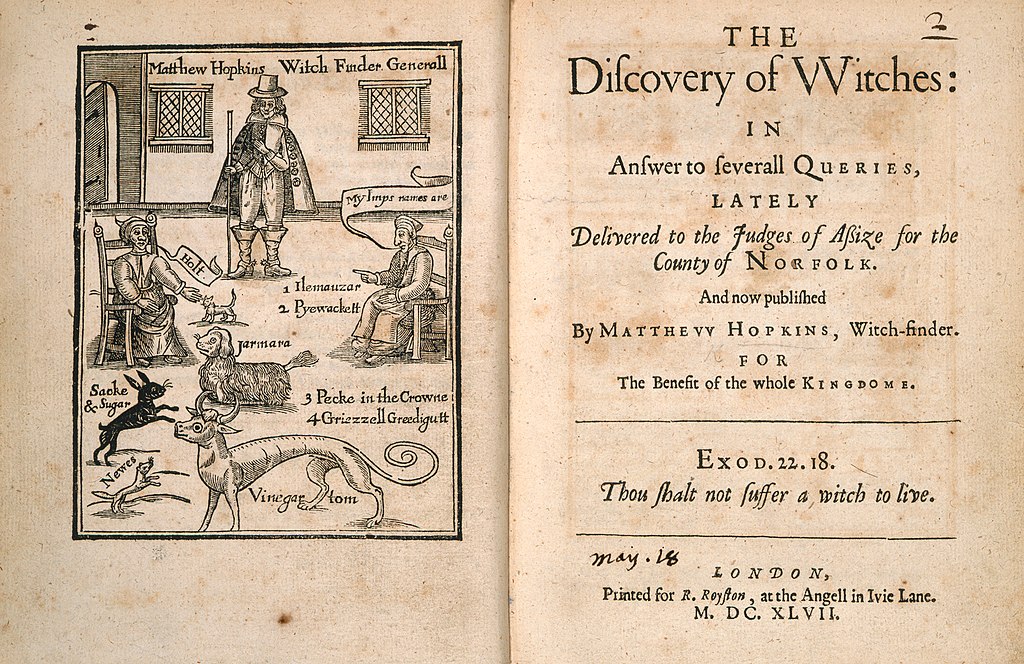
It could, of course, be very dangerous to be a witch or faith healer of any colour or description. Active persecution for witchcraft continued until the 1700s and the last person to be accused of witchcraft was Jane Yorke, prosecuted in 1944 under the Witchcraft Act of 1736.
All that given, its perhaps a surprise to find a documented white witch, or faith healer, in Kingsland history!
In a deliciously snipey and snide letter to The Gentleman’s Magazine [1] on 10th November 1804, J.P. Malcolm wrote: “…Elizabeth Hughes has performed miracles, the community of Herefordshire have honoured Kingsland exclusively, by annexing its name to the imposter as the Kingsland Doctress.”
It seems that Malcolm, during a jaunt through Herefordshire in a one-horse chaise with a friend, didn’t meet Elizabeth herself, but satisfied himself with gossip and hearsay, writing “…the following particulars should be recorded, as a proof of how very readily knaves may profit by public credulity, even in 1804. Indeed, after this instance of folly, I should not at all be astonished to hear of dragging witches through horseponds [sic] in 1805.”
It’s safe to say that J.P. Malcolm was a sceptic!
Elizabeth Hughes was twice married, the second time to a man called John Hughes, a husbandman in nearby “Fondon” [2]. After the death of one of their children, she had apparently grieved to such an extent that she was given to visions (Malcolm is particularly spiteful on that point) that told her she could appease God by performing miracles by curing the lame, the blind and other “morbid affections”.
The cures apparently took the form of stroking the diseased parts of those who came to her. This was enough to cure them, although Malcolm notes that if it did not, Hughes had no reason to complain as “she cleared a full 3000l [3] by her last vision”.
Malcolm closes his account, in his own inimitable way, by saying “Elizabeth Hughes is a stout woman, middle-sized, of a sallow complexion, and about 47 years of age; and, if she is not a stupid deceived fanatic, richly deserves transportation.”
It seems strange that a woman making a small fortune, claiming to heal the sick by touch alone, did not come to the notice of wider authorities. Remember, this is only 68 years after the Witchcraft Act – living memory for many. The Act was also reinforced with a new statute in 1824, so it was very much a “live” act that was used “to root out ignorance, superstition, criminality and insurrection” [4].
However, we haven’t yet been able to find any official record of her, or even an image. More research is needed on this fascinating character!
If you have any research relating to Elizabeth Hughes, please let us know by emailing kingslandchurchoffice@gmail.com.
Sources and Footnotes:
1. The Gentleman’s Magazine reproduced by Google Books. J.P. Malcolm’s letter is on page 995 (webpage 399).
2. There does not appear to be an existing village called Fondon in Herefordshire. If anyone knows of a disappeared village or where Malcolm may be referring to, please let us know.
3. A pound could be abbreviated into £ or l as shown here in Malcolm’s letter. In 1804, 3000l would have been the equivalent of 2000 days work for a skilled tradesman. In other words, a small fortune. Source: https://www.nationalarchives.gov.uk/currency-converter/#currency-result
4. Hutton, Ronald. The Triumph of the Moon: A History of Modern Pagan Witchcraft. Oxford University Press 1999. Page 107.
Previous Posts
The Doctress of Kingsland…
There is a long history of white witches and faith healing in Britain. For ordinary people, white witches or “hedge” witches were often women who simply had enough herbal knowledge...
The Doctress of Kingsland…
There is a long history of white witches and faith healing in Britain. For ordinary people, white witches or “hedge” witches were often women who simply had enough herbal knowledge...
Welcome…
...to the blog for St Michael and All Angel church in Kingsland, Herefordshire! For those of you who have been following us on social media, you will know that we're...